


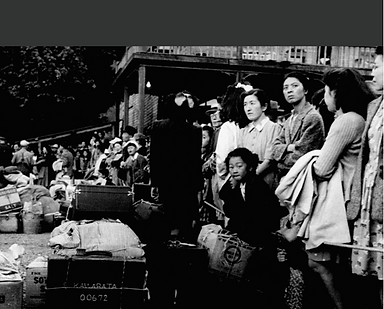
Japanese Canadians waiting for a train for Vancouver at Slocan City Train Station, 1946
Forced repatriation (deportation) of the Japanese Canadians
The forced relocation, systematic dispossession, and postwar exile of Japanese Canadians in the 1940s represent a watershed moment in the history of Canadian civil liberties and state power. The policy of "repatriation"—a state-sanctioned euphemism for what was the forced exile of Canadian citizens—did not emerge in a political vacuum. Rather, it was the culmination of decades of institutionalized anti-Asian discrimination, racial anxieties, and economic protectionism, primarily concentrated in British Columbia. This incident is well documented in the history of Japanese Canadians. Yet I have several subjects I want to learn more about in depth. In this report, I investigate those subjects and add them after a general overview of the “repatriation” policy and its aftermath on the Japanese Canadian community. The subjects include:The nature of the 3,963 exiles; The nature of the 3,963 exiles; The number of the repatriated Japanese Canadians who came back to Canada; Repatriated Japanese Canadians and the Bird Commission; The 1988 Redress Settlement and the repatriated Japanese Canadians
日系カナダ人の日本への追放
1940年代における日系カナダ人の強制移住、組織的な財産剥奪、そして戦後の追放は、カナダの市民的自由と国家権力の歴史における分水嶺となる出来事である。「本国送還」という政策、カナダ市民に対する強制追放を国家が容認した婉曲表現は、政治的な空白の中で生まれたものではない。 主にブリティッシュコロンビア州に集中していた、数十年にわたる制度化された反アジア人差別、人種的不安、そして経済保護主義の集大成であった。この出来事は日系カナダ人の歴史において十分に記録されている。しかし、私がさらに詳細に知りたいと思ういくつかのテーマがある。本報告書では、「本国送還」政策とその日系カナダ人コミュニティへの余波に関する概説の後に、それらのテーマに付いての調査を追加する。テーマは、3,963人の送還者の実態、送還日系カナダ人のカナダへの帰還、カナダに戻った送還日系カナダ人の数、送還者とバード委員会による強制売却された財産の補償、1988年の補償合意と送還日系カナダ人、である。